

Experience of Sarin Terrorist Attacks in Japan and an Exclusive Interview with the Japanese Prime Minister
On February 6, 2015, nearly 100 former correspondents from China stationed in Japan will be attending the “Fifty Years of China Stationing Correspondents in Japan Commemorative Forum.” That’s right, it has been 50 years since China’s new government started stationing correspondents in Japan. The first Chinese journalists were officially dispatched to Japan in 1964, a full eight years before the establishment of formal diplomatic relations between China and Japan.
Among these reporters who could both speak Japanese and write articles, in particular, Haihe Su from the China Youth Daily, was the master of ceremonies for the Fifty Year Forum. He was charged with contacting past colleagues who were stationed in Japan at the same time as himself, including ex-Deputy Minister of Culture Deyou Liu and the Wenhui Daily’s first Japan stationed correspondent Yanzhou Liu.
Su was stationed in Japan on two separate occasions, first from 1992 to 1996, and then from 2001 to 2005. When asked about the eight years he spent in Japan, Su says: “After having experienced and witnessed all the ups and downs in the sometimes tumultuous Sino-Japan relationship, I eagerly anticipate further development of the friendship between these two nations, and in particular between these two peoples.”
The Stationed Journalist: Lonely and Busy
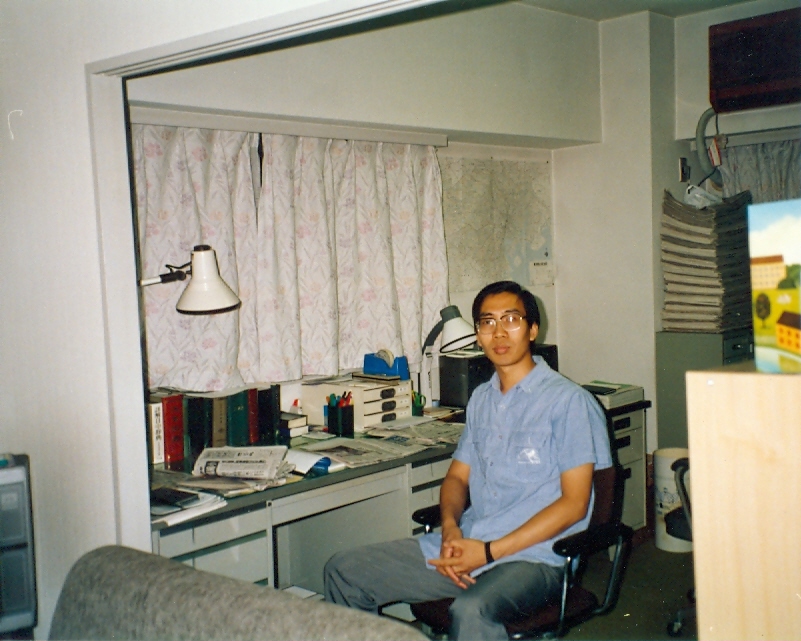
Su first landed in Japan on June 15, 1992. After a long flight, he then hopped in a car for an 80-kilometer ride before finally walking into the offices of China Youth Daily’s Tokyo Station.
Within 10 minutes of his arrival, the newspaper asked him to conduct an interview and send a briefing on the National Diet of Japan’s resolution to send peacekeeping forces abroad. Even though Su had been collecting Japanese news in Beijing for many years prior to making the move, this was his first day in Tokyo and he didn’t even know how to operate the fax or dial an international phone number yet.
“But you learn by doing,” he said. “Once you get into it, you’ll pick things up quickly enough.”
So he turned on the TV immediately to follow the news, as well as find the day’s Japanese newspaper. Meanwhile, the full text of the resolution had also arrived at the station from the Press Center of the Ministry of Foreign Affairs. Su quickly collected all the information and picked up the phone to interview a Japanese political analyst. By 8 p.m. that evening, Su’s “First Report out of Tokyo” had been successfully transmitted back to Beijing.
During the eight years Su spent in Japan, he said he would get five different local newspapers by 7 a.m. every day. He said he takes the next two to three hours to browse through the papers and draws up an interview plan based on the information he gathered.
“The Japanese media reports on a variety of news, and the journalism scene moves very quickly,” Su said, “If you want to interview any politician or analyst, you need only apply and most of the time your request will be granted.”
“The Xinhua News Agency has more than 10 stationed reporters in Japan, while China Youth Daily has just me,” Su had to wear multiple hats in Japan. Even though he said it was “exhausting and lonely,” the opportunity to personally experience breaking news events gives this journalist who “didn’t fail his mission” a great sense of accomplishment.
When the News Broke, “I Was There”
“Interviews are made with the feet. That’s the only way to get the real scoop,” Su said, “Without the process, you won’t get the news. Only when you are there on site can you really understand the details and the backstories.”
Tokyo was hit with the “Sarin Gas” terrorist attack at 7:50 a.m. on March 20, 1995, which shook the world. The Japanese cult Aum Shinrikyo, faced with a police investigation, released Sarin gas in multiple subway lines during Tokyo’s morning rush hour, killing 13 and injuring nearly 6,000 people.
Su drove out of the station for an appointment and noticed that all subway entrances had been sealed shut. Years of journalism training kicked in, and Su immediately switched on the car’s radio, where he learned “exactly what was taking place.”
Su said he ran towards the nearest subway station with his reporting gear. As a trained reporter, he had the habit of always carrying a camera and notebook wherever he went, and they served him well this morning.
At the scene, Su was met with large numbers of police cars, fire trucks, and ambulances. Paramedics were providing emergency care to poisoned passengers by the side of the road.
“By that point, I had no time to think about my own safety. All I remembered was to interview as many people as I could and gather as much material as I could,” Su did not have time to find protective gear, choosing to get to work with his camera instead.
That very day, China Youth Daily received Su’s onsite reports and news photos in real time.
“If it were today, my piece may have made the headlines on Weibo or Wechat!” If the internet were as advanced then as it is today, Su would undoubtedly have been among the first stationed reporters to send back news updates.
Prime Minister Interview: Turning the Impossible into Possible
In August of 1997, Su had finished his first extended trip to Japan and returned to Beijing. He found out from the Ministry of Foreign Affairs that then Japanese Prime Minister Ryutaro Hashimoto was planning to visit China in early September. This was Hashimoto’s first official visit to China, at a time when Sino-Japan relations could be described as tenuous and sensitive. Su’s journalistic instincts told him that this was the right opportunity to interview Hashimoto.
He quickly drafted an interview application and submitted it to Japan’s Ambassador to China Sakutaro Tanino.
There had been many requests for interviews with Japanese Prime Ministers or other important Japanese politicians from China Youth Daily during sensitive times in the Sino-Japan relationship prior to this, and none had been approved.
“Perhaps it was good fortune, perhaps it was because some of the articles I published while in Japan had been met with positive reactions, or perhaps the Japanese embassy wanted to pave the way for Hashimoto’s visit with some positive publicity; whatever it is, Ambassador Tanino agreed to try and arrange an interview,” Su said.
Three days later, the Embassy formally informed the China Youth Daily that Prime Minister Hashimoto agreed to an interview. Since the Japanese side could not determine the exact interview time in advance, Su and then China Youth Daily Deputy Editor in Chief Zhou Zhichun arrived in Tokyo in late August to wait for word from the Ministry of Foreign Affairs.
Su and Zhou kept themselves busy, conducting interviews with Japanese scholars, young students, and Ministry of Foreign Affairs officials in preparation, in order to gain a full understanding of the Japanese society and the Japanese people’s expectations for the evolving Sino-Japan relationship.
While the preparatory interviews were underway, Su got a call from the Ministry of Foreign Affairs, “Prime Minister Hashimoto is too busy to arrange for an interview.”
“It was as though my head was dunked in a bucket of ice water. All hope was lost,” Su said. Even though Su kept trying to make his case on the phone, he was not able to reverse the course.
He says he understands that interviews with important political figures are often heavily constrained by time. These people have extremely busy schedules that are often not under their control. But Su is not one to be deterred. The temporary setback had only given him more reason to be bold, “I did not plan for failure. It’s not canceled just on his say so!”
That very afternoon, Su said he visited Japan’s Ministry of Foreign Affairs once again and explained his intentions to the Asian Bureau Director Anami Koreshige – the exclusive interview with the Prime Minister was to pave the way for the diplomacy ahead, and Su hoped that the Ministry could help him complete his mission.
As he was exiting the Ministry building, he ran into Ambassador Tanino at the gate, who had returned to Japan to prepare for the Prime Minister’s China visit.
Su told the Ambassador about the news of the interview cancellation and asked him to help. “The Chinese people are very interested in Prime Minister Hashimoto’s upcoming visit to China and we hope very much to capture any signals from the Prime Minister to help the people understand how he intends to enhance Sino-Japan relations. This would be a great way to set the tone for the Prime Minister’s state visit, so I ask again that Ambassador Tanino to please help make any effort you can to arrange the interview.”
Ambassador Tanino was moved by his sincerity, “I will do my best to help you,” he said. He then turned to enter the Ministry building.
Su felt that the Ambassador could swing things his way. “I am guessing the Ambassador will have a direct face to face with the Prime Minister,” he said.
At 9 p.m. that evening, Su was notified by a press officer from the Ministry of Foreign Affairs, that Prime Minister Hashimoto will be available for a 30-minute interview at 11:30 am the following morning.
The next morning, as the Prime Minister’s assistant opened his office door. The Press Officer reiterated that the Prime Minister had only 30 minutes, and not a moment longer.
The interview went smoothly. Hashimoto was extremely forthcoming on topics ranging from the histories between the Chinese and Japanese people, the Prime Minister’s personal enthusiasm and development plans for Sino-Japan relations, as well as expected accomplishments for his upcoming trip.
When asked about this, Su speaks with some emotion, “Hashimoto spoke to me like an old friend. He answered every single question with great detail.”
Half an hour passed in a flash.
Su looked at his watch and reminded the Prime Minister, “Our time is up, but we still have many more questions.”
“No problem, keep asking. You can ask anything you want, even if it’s outside the interview outline,” Hashimoto obliged.
Su and Zhou looked at each other; they could hardly contain their joy. They continued with all the other questions that they hadn’t yet asked from the interview outline, as well as personal interpretations of Sino-Japan relations. Hashimoto expressed his views on youth exchanges, cultural exchanges, and national health exchanges between the two nations.
The interview lasted well over an hour. By the time they departed the Prime Minister’s office, Hashimoto’s personal motorcade rushed out the compound’s front gates before them.
Twenty minutes later, Su and Zhou arrived at their offices in the Japanese Journalism Club some two kilometers away and began writing. They saw Hashimoto answering questions from the Diet on the live TV broadcast.
“Hashimoto didn’t even get a chance to have lunch!” Su said in astonishment.
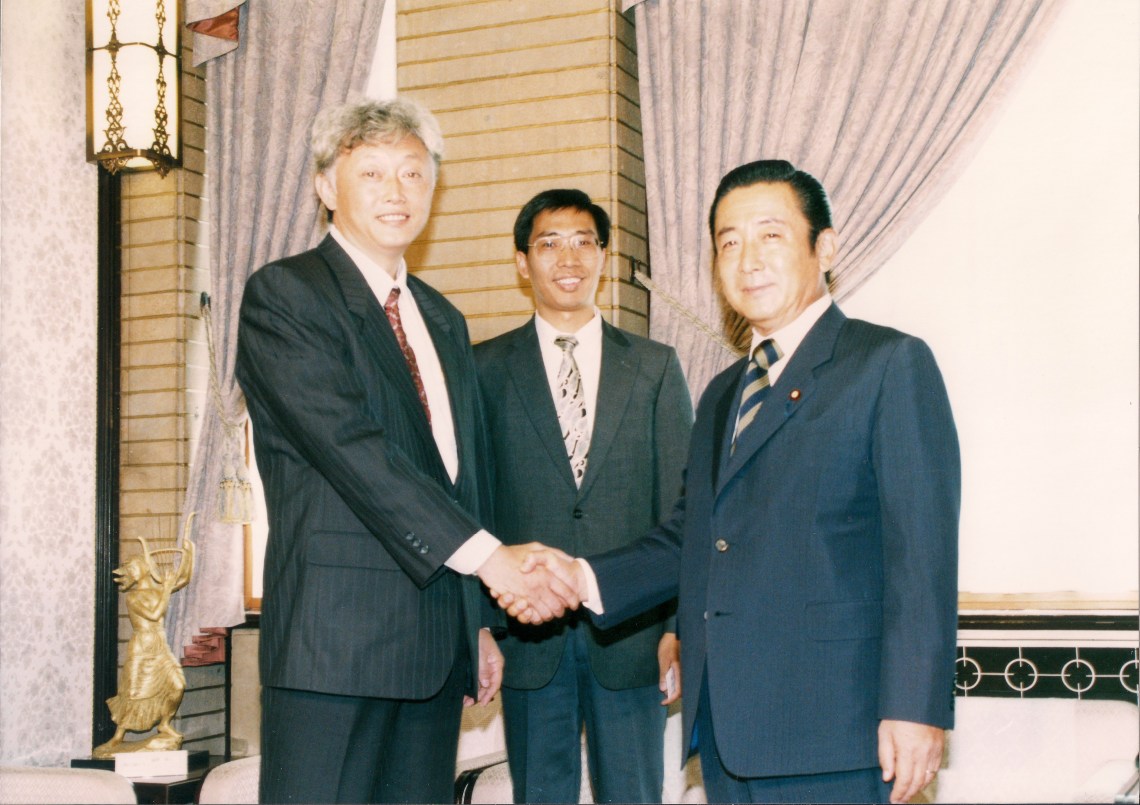
This “interview that ran over the Prime Minister’s lunch” gave Su deep insights into Hashimoto’s views on the Sino-Japan relationship and his expectations for the upcoming China visit. Su’s article was published in China Youth Daily’s Hashimoto China Visit Preview edition. it was given the China International News Award by the China State Council in 1998.

 Zhongyi Su